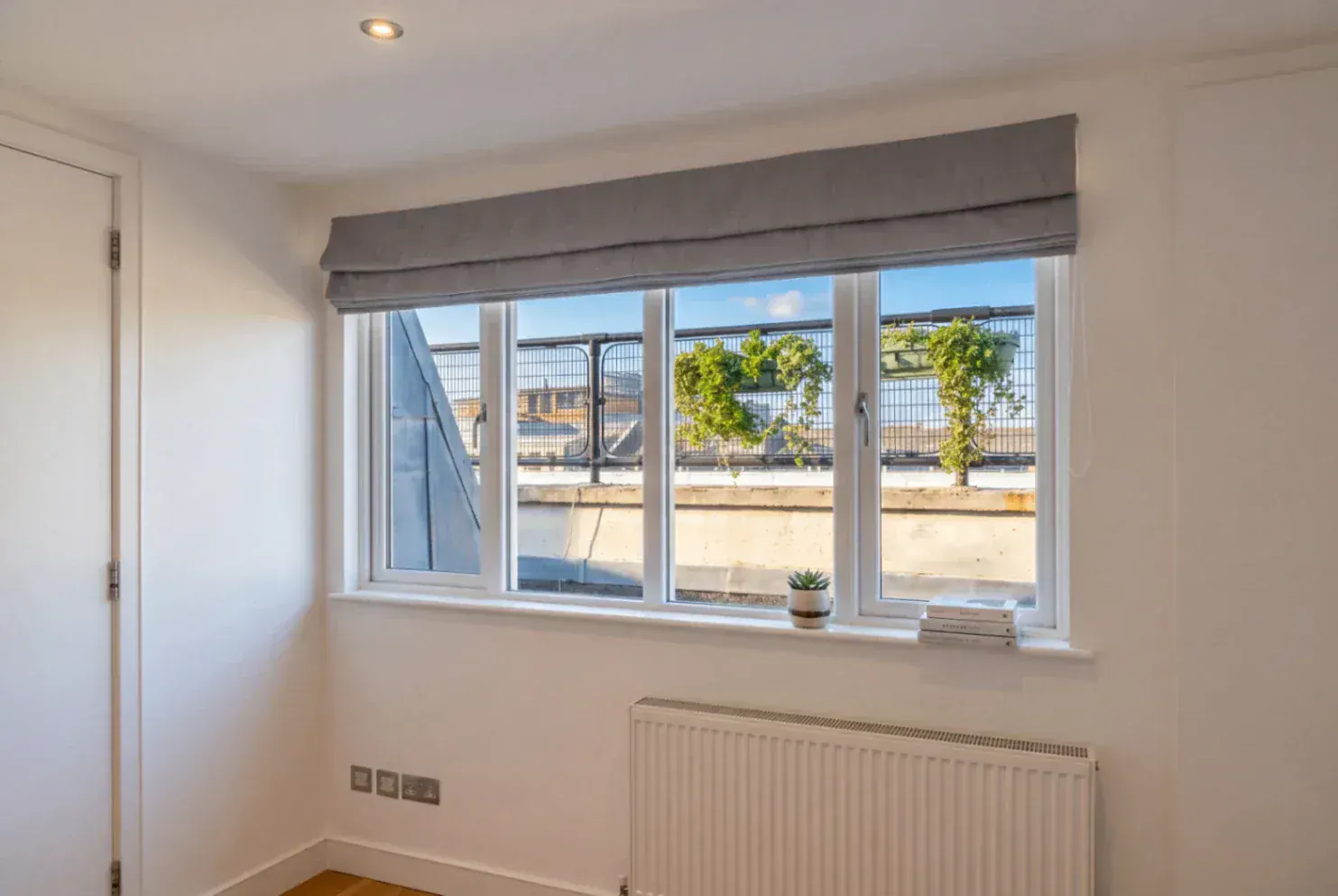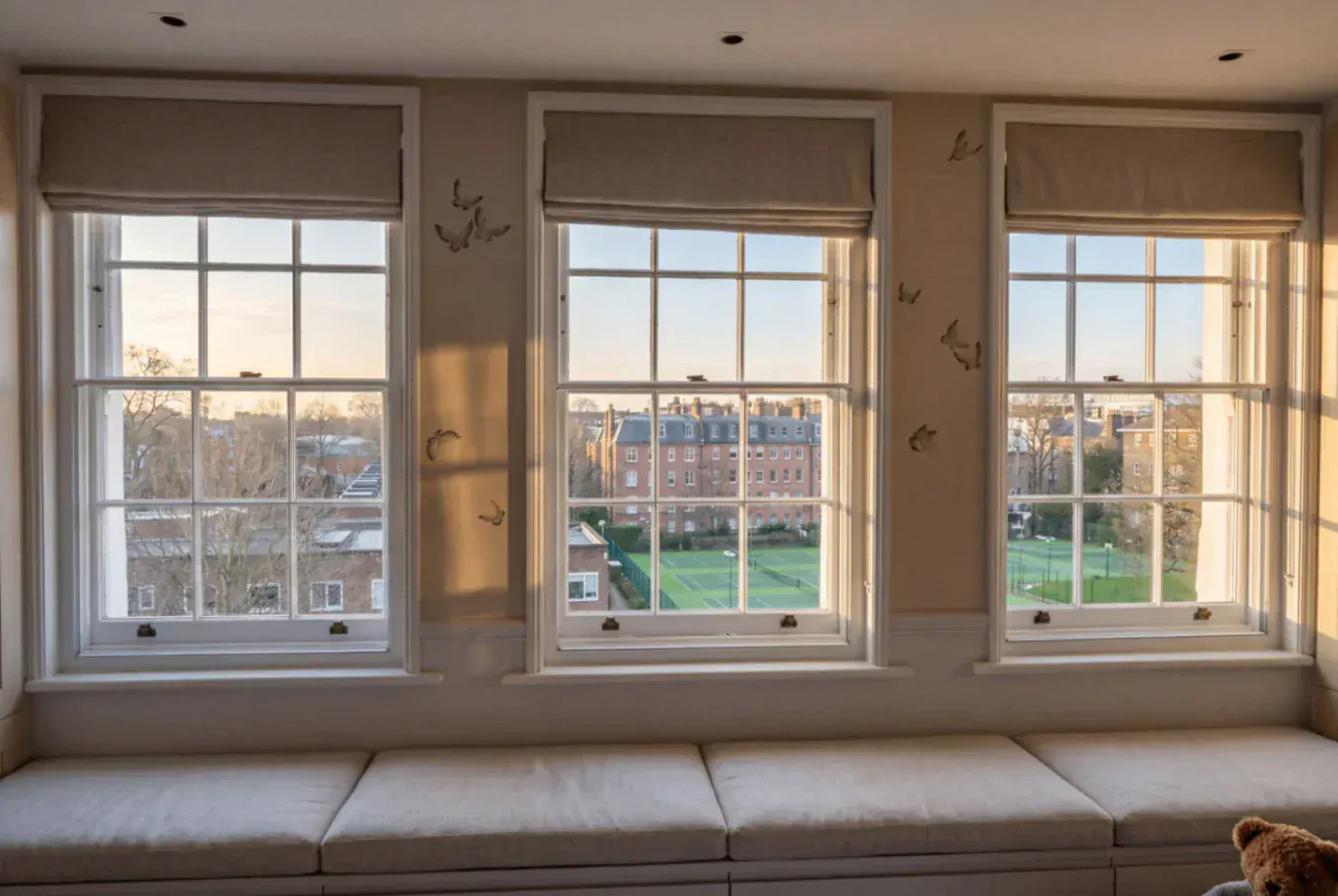
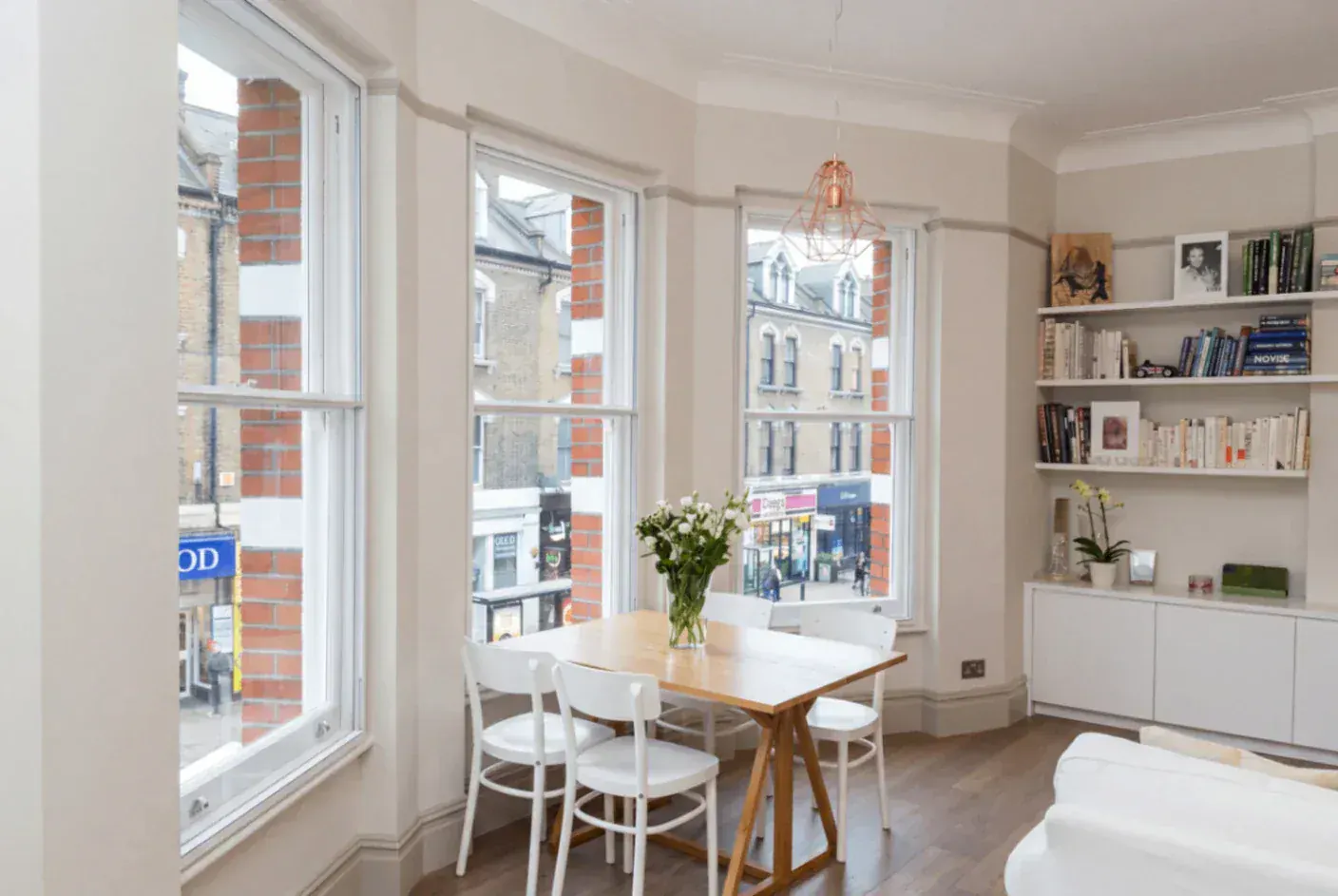
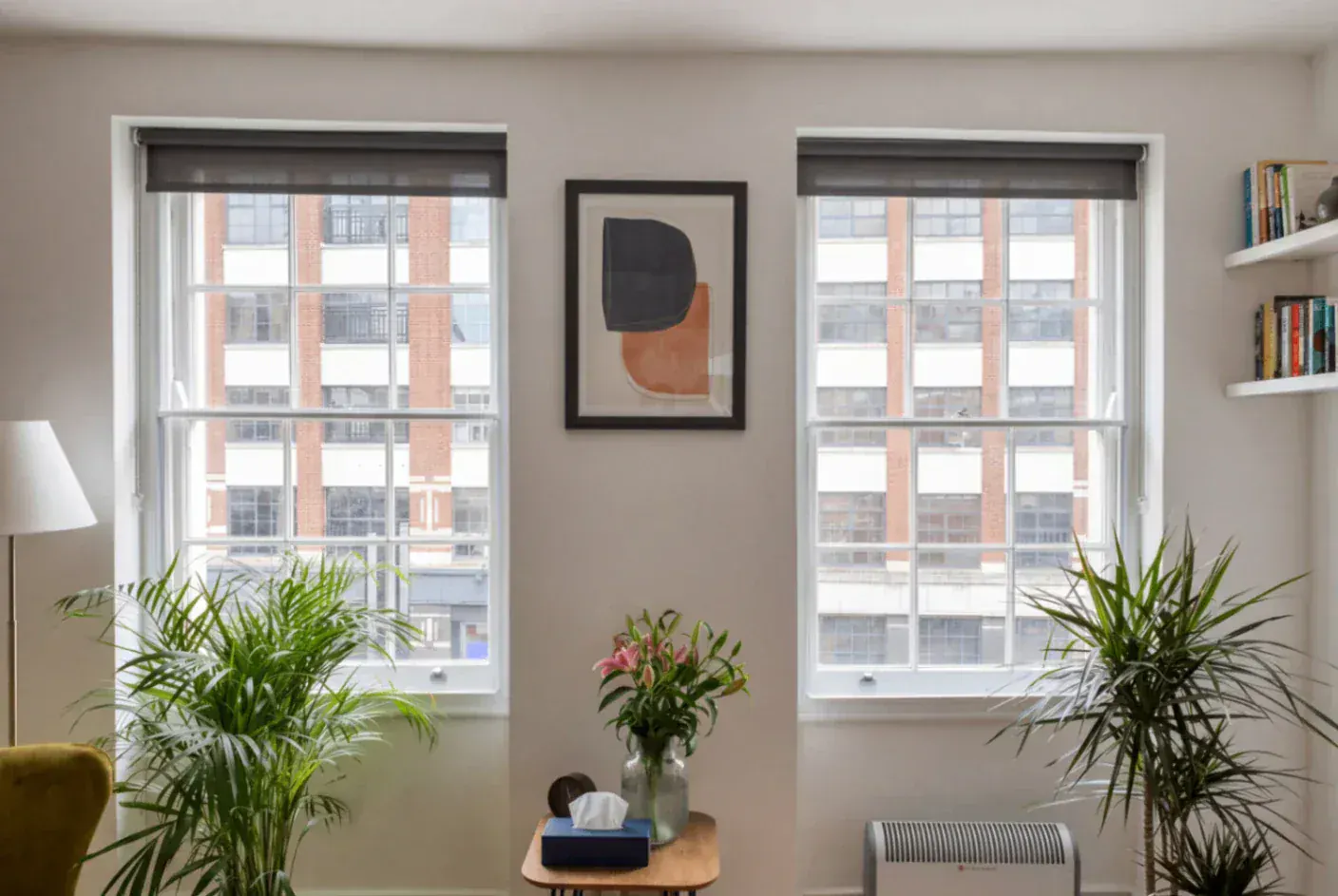
Westminster's period housing stock runs from Regency stucco terraces in Belgravia and Pimlico to Georgian townhouses in Mayfair, red-brick mansion blocks near Victoria and Baker Street, and terraced streets in Marylebone and Maida Vale. Original single-glazed sashes and casements are part of that character, but they can also let in traffic noise and cold air. Secondary glazing adds an internal layer behind the existing window, so the original elevation and interior can stay largely unchanged. The practical result still depends on the window condition, glass, air gap, seals, ventilation, room and installation quality.
This is a Westminster-only guide. It complements, rather than replaces, our Kensington and Chelsea comparison. It is not a promise of a borough-wide result: a quiet mews window behind a Belgravia square presents a different brief from a flat on Marylebone Road, Park Lane or Edgware Road.
Westminster contains an unusually dense mix of listed townhouses, mansion blocks, mews properties, converted flats and post-war estates, often within one street. A sash may be tall and narrow in a Georgian terrace, a bay may be faceted on a mansion block corner, or a shared stair and lease may restrict what a leaseholder can change unilaterally. Shutters, radiators, architraves, curtains and escape routes also affect what can be fitted.
Original windows should be assessed before a specification is chosen. Secondary glazing does not repair rotten timber, loose putty, failing sash cords, water ingress or a defective wall-to-frame junction. Repairs and draught-proofing may need to come first, and any fixings into historic fabric should be considered carefully.
Why Westminster windows need a measured response
The varied buildings, exposures and window details make a measured brief more useful than a borough-wide promise. Define the room's real priority, record the existing opening and consider the building's heritage status before choosing glass, cavity or opening style.
What secondary glazing may change
Noise: useful potential, not a guarantee
In a suitable opening, a well-sealed secondary-glazing system with an appropriate glass specification may be discussed in the region of 45–50 dB reduction, or 70–80% less perceived external noise in simplified marketing language. These figures are indicative and specification-dependent, not a promise for every Westminster room. Ask whether the figure is a laboratory rating, a predicted whole-window result or an on-site measurement.
Westminster has several of London's busiest routes running through or alongside its residential streets, including sections of Park Lane, Marylebone Road, Edgware Road and Victoria Street. Traffic, sirens, aircraft and Underground lines have different frequency profiles, and noise can also travel through masonry, roofs, doors, vents and floors — particularly relevant in a mansion block where sound may pass between neighbouring flats as well as from outside. A survey should identify the dominant path before acoustic glass and an air gap are selected.
Warmth: window calculations are not whole-home forecasts
As an illustrative specification discussion, a single-glazed window with a U-value around 5.0 W/m²K may be modelled nearer 1.8 W/m²K after adding a suitable secondary layer — approximately a 64% reduction in heat transfer through the window area in that calculation. The values are indicative and specification-dependent; glass, cavity, frame, seals, edge details and the original window all matter.
Some households may see 10–30% lower annual heating use after a window upgrade, but that range is property-specific and cannot be treated as a forecast. Heating controls, occupancy, exposure, walls, roof, floors, doors, ventilation and energy prices may dominate the whole-building result. Read our period-property energy-efficiency guide for the wider context.
Westminster planning and heritage questions
The City of Westminster is one of the most heavily protected boroughs in London: it has 56 conservation areas, including Mayfair, Belgravia, Marylebone, Pimlico, Soho, St James's, Covent Garden, St John's Wood, Knightsbridge and Maida Vale, alongside a very high concentration of listed buildings. Westminster City Council's own guidance is explicit that if a property is a listed building, or within the curtilage of one, you must apply for Listed Building Consent for new windows, alterations to your windows, or secondary glazing — secondary glazing is named directly, not just full replacement. The council's supplementary planning guidance on listed buildings adds that secondary glazing is "more likely to be acceptable" than double-glazed replacement units, but consent will only be granted where it can be installed without damaging the external appearance of the building or the integrity of historic interiors.
Many of Westminster's conservation areas are also covered by Article 4 Directions, which remove certain permitted-development rights — including, in some areas, the right to alter or replace windows without a full planning application. Whether a specific Article 4 Direction applies to windows at a given address, and whether that extends to internal secondary glazing, is address-specific and needs checking with the council before work starts — internal and reversible does not automatically mean exempt, and a fixing into original timber, shutters or a significant reveal can still matter. For a deeper heritage overview, see the listed-building secondary-glazing guide. If the right route is unclear for a specific Westminster address, contact SecondaryDoubleGlazing with photographs and the property details, or check directly with Westminster City Council's planning and conservation team.
| Window or priority | Possible direction | Questions to resolve |
|---|---|---|
| Tall Georgian or Regency sash | Vertical sliding secondary glazing | Will the meeting rail, cords, handles and ventilation remain usable? |
| Mansion-block casement | Hinged, sliding or lift-out unit | Is there space for the opening arc and safe cleaning access, and does the lease allow the change? |
| Faceted or curved bay | Several linked units or a shaped design | Can the geometry, corners, curtains and sill support the proposed arrangement? |
| Park Lane, Marylebone Road, Edgware Road or Victoria Street exposure | Acoustic glass with a considered cavity | Which frequencies are troublesome, and are there flanking paths through walls or shared floors? |
| Listed or conservation-area property | Reversible, discreet fixings and finish | What does Westminster City Council require for this specific address and Article 4 status? |
Which system might suit a Westminster window?
The most suitable option is not automatically the thickest glass or widest cavity. The survey should balance acoustic ambition with room depth, sightlines, condensation risk, access, ventilation and the significance of the original fabric.
For early budgeting only, three broad supply-and-installation bands might be discussed as follows. These figures are indicative, excluding VAT where applicable, and specification-dependent rather than quotations.
Indicative Westminster cost guide
| Typical scope | Indicative guide price |
|---|---|
| A straightforward secondary-glazing panel | £500–£800 + VAT |
| A more involved opening, finish or glass specification | £900–£1,600 + VAT |
| A complex bay, acoustic or heritage-sensitive arrangement | £1,700–£2,400 + VAT |
The number and size of windows, access, repairs, glass, frame finish, hardware, bay geometry and installation time can move the price outside these ranges. Compare written quotations that state the glass, air gap, seals, opening style, preparation, VAT and aftercare.
What happens during a survey?
The surveyor should measure width, height, squareness, reveal depth, sill condition and clearance around handles, shutters, curtains and radiators. Photographing the details helps keep the agreed design tied to the actual window. Look for rot, cracks, loose putty, failed paint, movement, draught paths, water staining and safe operation. Secondary glazing can reduce some air movement, but it is not a substitute for making the original window sound.
Discuss whether the priority is traffic noise, warmth, draughts, access, appearance or a combination. Ask for the proposed glass type, cavity, seals, frame colour, handles, ventilation strategy and fixing method in writing. Confirm how the original sash will be cleaned and operated, how the secondary unit opens, whether a bay or mansion-block casement is property-dependent and what permissions or landlord, freeholder or managing-agent approvals are needed — this is particularly relevant in Westminster's many leasehold mansion blocks.
- The opening is recorded.
- The primary window is checked.
- The brief is translated into a specification.
- Heritage and everyday use are considered.
Westminster secondary glazing FAQ
Will secondary glazing make my Westminster flat quiet?
It may reduce external noise when the glass, cavity, seals and installation suit the opening, but no universal dB or percentage result can be guaranteed. Underground vibration, shared walls in mansion blocks, vents and other flanking paths may remain audible.
Is secondary glazing automatically allowed in Westminster?
No. Westminster City Council requires Listed Building Consent for secondary glazing on listed properties, and many of its 56 conservation areas carry Article 4 Directions that can affect window works. Whether a specific address needs consent depends on its listing status, conservation-area designation and Article 4 status — check with the council before ordering.
Can secondary glazing remove condensation?
It can warm the room-facing pane and may reduce condensation on that surface, but it does not remove indoor moisture or guarantee elimination. Humidity above roughly 60% RH, weak ventilation, leaks, cold bridges and moisture between panes still need diagnosis.
Will a mansion-block or bay window be straightforward?
Not necessarily. Bay geometry, corners, sill depth, curtains, access, lease terms and the condition of the original frames are property-dependent. A survey is needed before a linked or shaped solution can be specified.
How much will a Westminster installation cost?
The ranges above are early budgeting guides only. A written, survey-based quotation is needed because the opening, glass, access, repairs, finish and VAT determine the actual price.
A considered next step
Secondary glazing can help a Westminster period home feel warmer and calmer while preserving the original windows and meeting the council's heritage requirements. The sensible route is to document the opening, check listed-building and Article 4 status with Westminster City Council, and compare a specification based on the room's real problem.
Would you like to discuss your windows? Contact SecondaryDoubleGlazing for a measured conversation and a no-obligation quotation.